Saudi Arabia Princess

saudi arabia princess

Saudi Arabia City

Saudi Arabia is the best and oil power country.Saudi arabia have big petrol,Diesel and other thing.In this age the Saudi Arabia have big wealth from the oil.This country export the oil so many country east and west both are continent.

saudi arabia city
saudi arabia city
saudi arabia city
saudi arabia city
saudi arabia city
saudi arabia city
saudi arabia city
saudi arabia city

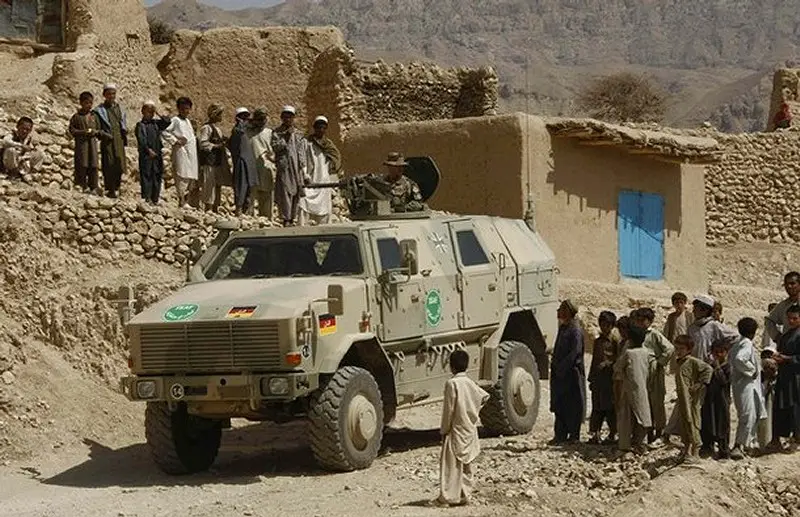
Germany Army

germany army
germany army
germany army
germany army
germany army
germany army
germany army
germany army

Indonesian Air Force Projects 10 Fighting Squadrons

11 April 2011

Indonesian Air Force (TNI AU) will have 10 fighter sguadron by 2025 (photo : Detik)

TEMPO Interactive, Jakarta: The Indonesian Air Force is projecting to improve its military force by 2025, but the plan is hampered by budget issues. Although it has tried to improve the budget, the increase has not been significant.

Indonesian Air Force expert staffer Marshall Parulian Simamora, said the target was to have 10 fighting squadrons, 7 carrier squadrons, 1 VIP/VVIP squadron, 3 strategic spy squadrons, 6 helicopter squadrons, 4 training squadrons, 1 tanker squadron, and 1 PTTA/UAV squadron and military equipment by 2025.

In 2011, the Indonesian Armed Forces was given a Rp44 billion budget, while the Air Force was given Rp7.4 trillion, Rp4.2 trillion of which was used to improve existing military equipment.

Which such budget, the military hopes the national industry can maximize the development of the military and defense equipment industry. Indonesian Air Force chief of staff Marshall Imam Sufaat said a strong local defense industry could reduce dependency on foreign aid.

Imam said the local industry he referred to was not only the plane, rocket, satellite and air balloon manufacturing industry, but also the aviation system industry or airplane component industry. Besides the industry sector, air defense must also be supported by the aviation service, such as air transportation, telecommunication services, flight safety, and maintenance.

PT Dirgantara Indonesia’s Aerostructure director Andi Alisjahbana, said the need for fighting and defense equipment did not always rely on foreign producers. Maintenance and repairs are needed to generate the component industry.

Dirgantara has developed a specific aircraft for the past two years. This year, PT Dirgantara plans to send four aircrafts to South Korea. The four aircrafts, valued at US$100 million, were ordered by the Korean Coast Guard.

(Tempo Interaktif
)

From Chicago to Belgrade and Zagreb

Swift Air to operate flights to Belgrade and Zagreb
An American charter operator, Air Plus, has announced plans to commence flights from Chicago O’Hare International Airport to both Belgrade and Zagreb this summer. According to the charter operator, it is already selling tickets through various travel agents in the United States and nonstop flights are set to commence in June, using a 235 seat Boeing 767-200ER from the designated airline operator Swift Air. Ticket prices amount to approximately 760 Euros from Chicago to Zagreb and 800 Euros to Belgrade (roundtrip).

Both the Serbian and Croatian civil aviation agencies have remained tight lipped about the service but the former has confirmed it is in the process of granting a license to Swift Air. Only a week ago it was said that Ryan International Airlines, which was supposed to operate services from Chicago and Toronto, would not be doing so and no hints were given that other airlines were interested. At the beginning of the year Zagreb Airport said it was on the verge of securing a major US carrier to operate flights to the Croatian capital but has been quiet ever since.

Air Plus will operate flights from June 17 to September 14. A total of 58 flights are expected to be operated to the two cities. Since designated airline operator, Swift Air, is based in Phoenix, flights are set to originate from the city and operate to Belgrade and Zagreb via Chicago. Flight information will soon be available on the right hand side in the new route launches section.

South Korean Coastguard to Receive Four New CN-235s

11 April 2011


CN-235 for the South Korean Coast Guard (photo : duyz - Indoflyer)

South Korea's coastguard will induct four Indonesian Aerospace-built CN-235-220 maritime patrol aircraft in 2011.

Two of the new aircraft will enter service in April, and two in August, says the service. According to a report by South Korea's official Yonhap news agency, the four aircraft were purchased in 2008 for $100 million.

According to IAe, the aircraft has a pressurised cabin and is powered by two General Electric CT7-9C engines, each driving four-bladed propellers. The aircraft has a fuel capacity of 4,000kg (8,820lb) and an endurance of 8-10h. The CN-235 is capable of performing short take-off and landing operations, and has a maximum take-off weight of 16,100kg.

The South Korean air force operates 20 CN-235s, 12 produced by Airbus Military and eight by IAe.

(Flight Global)

SAF Deploys F-50 Maritime Patrol Aircraft to Gulf of Aden

11 April 2011 RSAF Fokker 50 MPA (photo Xairforces)

The Singapore Armed Forces (SAF) has deployed a Republic of Singapore Air Force (RSAF) Fokker-50 Maritime Patrol Aircraft (F-50 MPA) to support the international counter-piracy efforts in the Gulf of Aden. Chief of Air Force Major-General Ng Chee Meng officiated at the send-off ceremony for the 38-man F-50 MPA detachment at Changi Air Base this morning.

This is the first time that the SAF has deployed an F-50 MPA to support the international counter-piracy efforts. During its three-month deployment, the F-50 MPA detachment will be based in Djibouti and operate under the ambit of multinational Combined Task Force (CTF) 151. The F-50 MPA will conduct maritime air surveillance to provide CTF 151 with an enhanced sea situation picture of the Gulf of Aden, as well as perform coordinated search operations to locate and investigate suspicious vessels. The detachment comprises air, ground and communications support crew, as well as logistics personnel.

Since April 2009, the SAF has deployed two SAF task groups to the Gulf of Aden, each comprising a Landing Ship Tank and two Super Puma helicopters. The SAF was also in command of CTF 151 from Jan to Apr 2010. CTF 151 is currently led by Rear-Admiral (RADM) Harris Chan from the Republic of Singapore Navy (RSN), who is supported by an SAF command team.

(Mindef)

Air Force Eyes 18 More Super Hornets as JSF Delays

11 April 2011

An RAAF F/A-18F Super Hornet Block II multi-role fighter practices low-level flying near Amberley in Queensland. (photo : ADF)

Air force eyes 18 more Super Hornets as delays dog our new fighter

DEVELOPMENT of the revolutionary Joint Strike Fighter, intended to provide Australia's air defence through this century, is running well behind schedule and the RAAF may need to buy 18 more Super Hornets for $1.5 billion to fill the gap.

Australian defence officials head for the US this week for an update from Lockheed Martin Corporation, which is developing the stealthy, multi-role JSF, now named the F-35 Lightning II.

The Australian understands they will raise serious concerns about delays in the project and the possibility of an alarming gap in Australia's air defences from 2020 onwards.

A recent report by the US Government Accountability Office indicates the program, already behind schedule and over budget, is likely to experience additional production and cost pressures.

Australia plans to buy up to 100 F-35s for an estimated $16bn and has so far ordered 14, with the RAAF's first squadron supposed to be operating by 2018.

However, the US air force is buying the same variant of the JSF as the RAAF and has pushed back the dates by which it expects to have its first squadrons operational from mid-2016 to 2017 -- and possibly now to mid-2018.

Officials from Lockheed Martin have insisted the problems in the US will not mean any delays in delivering Australia's first 14 aircraft.

But there is growing concern in Canberra that the US delays will mean the RAAF's first squadron may not be ready until about 2020 and possibly later.

Alarm bells are ringing because it's likely that by 2020 the last 30 or so of the RAAF's older "classic" Hornets will have reached the end of their useful lives, even with extensive refurbishment.

The Howard government bought 24 Super Hornets for $6bn in 2007 to fill an earlier strategic gap left when the RAAF's F-111 bombers were withdrawn ahead of time because of concerns about fatigue.

Defence officials are preparing for the government a range of options to fill this looming gap in air defences with the most likely being the purchase of a further 18 Super Hornets for about $800 million each.

That would make economic sense, because the $6bn purchase price for the first 24 Super Hornets included the infrastructure to support them and that can be used for the additional aircraft.

Another option might be further refurbishments of the classic Hornets.

Officials from the Defence Materiel Organisation will join delegations from all of the nations involved in the JSF project for a comprehensive briefing on progress this week.

There have been three key issues with the JSF as its development progressed -- whether the F-35 will do all that's promised of it, whether it will be delivered on time and whether it will cost more than anticipated.

The Australian has been told development of the aircraft, which is packed with sophisticated radars and other electronic equipment, is progressing well and is likely to meet or exceed the expectations of the nine nations involved in its development.

But there is a growing acceptance in the RAAF that the aircraft will be late and a steady increase in costs is eating up the considerable margin built into the contract by Australia's Defence Department.

The original plan was for Lockheed to build 2443 JSFs for various arms of the American forces with about 500 others going to allies including Australia, Israel and Canada.

A long-time strong supporter of Australia's role in the JSF project, former RAAF air marshal Errol McCormack has warned that the likely delays mean the Gillard government must get a plan in place to ensure Australia's air defences are effective once the classic Hornets are retired.

Air Marshal McCormack, who now runs a normally strongly pro-JSF group of experienced military flyers known as the Williams Foundation, said in its latest bulletin the government should remember the RAAF's experience with the F-111.

The first Australian F-111s were to be delivered in 1968.

"Even though development and production slipped because of technical issues, Australia adhered to the delivery date rather than the production slot," Air Marshal McCormack said. As a result, in 1968 Australia took notional delivery of underdeveloped aircraft with technical difficulties.

"Consequently, there was a five-year delay in delivery while some of the technical problems were remediated.

"Several modification programs and almost 10 years later, the RAAF eventually operated an excellent bomber."

Air Marshal McCormack said this experience suggested there could be very good reasons for Australia to delay delivery of the F-35 until the production line was "mature" and problems were ironed out.

He suggested a solution could be to refurbish more of the classic Hornets to keep as many of them as necessary flying after 2020.

"In the Williams Foundation's judgment, it would be sensible to wait and see what happens with the F-35, while simultaneously investigating the cost of capability issues involved in maintaining the classic Hornet beyond 2020."

With other elements including the Jindalee Over Horizon Radar network, Australia's air defences could be world class for the next decade, Air Marshal McCormack said. "The issue is: what action is required to ensure that any further delays to the F-35 do not result in a capability gap?" Air Marshal McCormack said.

"The question is too important to be left unanswered."

Concern about air superiority has risen in Canberra and at the Pentagon since China this year unveiled its answer to the F-35. The prototype Chinese fighter jet has arrived years ahead of Western expectations.

It isintended that the the F-35s will replace both the F-111 long-range bombers and the RAAF's classic Hornets.

The new aircraft is also expected to replace all of the major aircraft in the US inventory.

The intention is for the RAAF to get its first two F-35s in 2014, despite the production delays in the US, according to Lockheed Martin.

The first two F-35s will remain in the US, and Australian pilots and ground crew will go to the US to train on the planes.

Adria plans for positive 2012

A320s return to the fleet as Adria plans financial restructuring
Adria Airways’ new financial restructuring plan should see the airline cut its losses by half this year and make a profit in 2012. The Slovenian national carrier is also on the lookout for a financial advisor. Late last year the airline made public it was operating with a loss and owes more than 80 million Euros in loans to various banks. The airline will pitch its financial plan to the banks in the hope of delaying repayments. In January, Ljubljana Jože Pučnik Airport wrote off 2.4 million Euros the airline owed to its hub, in return receiving a stake in Adria Tehnika.
Meanwhile, Adria will introduce 2 Airbus A320s, half a year after it farewelled the type from its fleet, which had been with the airline since 1989. One is being leased from the Italian low cost airline MyAir and is set to join the fleet tomorrow. The aircraft are expected to serve on charter flights throughout the summer season, while there is a possibility for one of the jets to stay with Adria long term, the “Delo” newspaper reports.

Germany Mountains

germany mountains
germany mountains
germany mountains
germany mountains
germany mountains
germany mountains
germany mountains

Missing.............Dyn Aero ZK-SML

From Stuff website updated at 1543 today (Sunday 10 April)

Rescuers searching for a missing former Olympian have narrowed their search to two areas after information was provided about aircraft dropping off the radar yesterday along his microlight's expected route.

The initial search was sparked when Auckland businessman Geoff Smale, 86, who represented New Zealand in yachting at the 1968 Mexico Olympic Games, left North Shore about 11am yesterday but failed to turn up in Ashburton by 3pm as planned.

Rescue Coordination Centre (RCC) spokesman Ross Henderson said Smale was an experienced and fit pilot and had made the more than 800-kilometre journey, expected to take up to four and half hours, a number of times.

The aircraft, a white microlight with red detailing, had a nine-hour flying range and was capable of 135 knots (250kph), so was able to complete the flight without refuelling stops.

The weather along the route yesterday was good overall, with a few cloudy patches, he said.

Earlier today four helicopters combed the area between Ashburton and Auckland looking for any sign of the microlight.

Henderson said rescuers had narrowed their search.

RCC search and rescue officer Neville Blakemore said radar tracking information provided by the Airways Corporation showed an aircraft leaving from Auckland at about the same time as Smale, then disappearing from radar about an hour later just South of Taharoa in the Waikato.

The information was roughly consistent with the estimated timing, speed and possible route of Smale's aircraft.

A helicopter from the Taranaki Rescue Helicopter Trust based in New Plymouth would carry out a thorough search of the area, Blakemore said.

As well, a fixed-wing plane from the Phillips Rescue Trust in Hamilton would fly a path between Auckland, Stratford and D'Urville Island in the Marlborough Sounds, after additional radar data provided by Airways showed an aircraft disappearing from radar about 1pm yesterday near D'Urville.

This was also roughly consistent with the estimated timing and possible route of Smale's aircraft.

Microlight pilot Mike Gray, of the Marlborough Aero Club, said flying conditions over Smale's route were good, except in Marlborough where a ''cyclonic gloom'' brought cloud cover down to about 250-400 metres.

''The higher you fly, the safer you are,'' Gray said. ''Once you get lower there are less options.''

If Smale had suffered a medical problem such as a heart attack, his plane could have continued unpiloted until it ran out of fuel or hit a mountain, Gray said.

A stricken plane ''does not drop like a stone or a brick'', he said. For every 12 metres a plane glided forward it would drop one metre.

Smale was carrying a personal locator beacon, radio, radar transponder and cellphone. The beacon has not been activated and attempts to contact Smale have been unsuccessful.

Dyn' Aero MCRO1 Club ZK-SML at its North Shore home in late January 2011, Mike Condon photo

Germany Landscape

Wow super and beautiful fantastic very nice photos of the Germany Landscape.Germany charming and excellent photos make every one impressed.I like it so much and make me glad when I see that pictures about the Germany.

germany landscape
germany landscape
germany landscape
germany landscape
germany landscape
germany landscape
germany landscape
germany landscape

Germany Attractions

germany attractions
germany attractions
germany attractions
germany attractions
germany attractions
germany attractions
germany attractions
germany attractions

Fletcher FU24-950 ZK-EMC

I have had an enquiry from one of our viewers about the status of the Fletcher FU24 ZK-EMC.
 Fletcher FU24-950 ZK-EMC , c/n 254 , was registered to New Zealand Aerospace Industries Ltd at Hamilton on 02-06-1978 for delivery to Rangitikei Air services Ltd of Taihape. It was involved in a fatal bystander incident at Taihape on 27-01-1980 when they walked into the propeller.
Photo above shows it at Stratford on 20-11-1984 wearing the name "Timahunga" on the engine cowling.
It was painted in Wanganui Aero Work colours sometime in 1985 and was traded into Pacific Aerospace Corporation Ltd at Hamilton on 04-04-2000, I believe towards a Cresco. Pic below show it at Hamilton on 20-03-2000.
Astro Air Ltd of Havelock North took it on from 29-11-2000; seen below at Hastings on 13-04-2002. It was damaged in a forced landing following an engine failure at Paupunga on 10-06-2007 and cancelled from the register on 19-10-2007.
Our enquiring viewer would like to know where it is now and if it is likely to be rebuilt in the near future ?

Blog Archive