December began with an article that related a healthy lifestyle to the first law of thermodynamics. The first law says that the quantity of energy contained within a system must be conserved – never created or destroyed. In relation to dieting, the lesson we may draw from this is that the amount of energy that we consume should be kept in check with respect to the amount of energy we output. Short of bariatric surgery, we must output more than we input for our body to lose weight.
Let us now take a closer look at the first law of thermodynamics. The conservation of energy principle has more to teach us than merely how to balance energy. The law also establishes the concept of mechanical work. Before getting into the physical definition of work, let us examine the traditional kind of work that we are all familiar with, like jobs and chores.
Have you ever heard a tough and hardened individual say, “You could learn a lot from a hard day’s work?” We get more out of life when we put more into it. As we will see, the benefits of working hard are actually predicted by the first law of thermodynamics.
I have observed the benefits of hard work as a student, a working engineer, and as a teacher. I always seem to derive more pleasure from my life when I allow my spirit to enter into my work. If I give myself to my work, I always seem to be rewarded for it. I do not mean that I get higher marks in school or a raise at work. Those things can and sometimes do happen, but something else even more important occurs in parallel.
Simply put, you feel good when you do a good job. Good marks, good pay... they are relished more when they are merited. Even when hard work is not rewarded in a tangible way (this is the standard for educators in North America), the work a person puts into something is its own reward. Much the way the body releases endorphins when physical work is done, accomplishing a task causes instant gratification in the brain.
To illustrate the inherent value in doing good, hard work, I want to share something a bit personal. In my recent experience as a teacher, I have seen some lows followed by some highs. This past January, the winter semester of 2010, I began teaching physics at the college level. I looked at the course outline, and set out to teach the course requirements. I did my job, maybe even a good job, but I did not invest myself into it. After all, I was not certain at the time whether teaching would be a short-term or long-term profession for me. The semester went by, and in the end, I felt that teaching was a bit of a drag. Was it because the students were too lazy? Was the material too boring?
I did some soul searching in the summer that followed, and debated a return to engineering. However, when the autumn semester rolled around, I opted to give teaching another go. This time around, I told myself that I would commit to the teaching profession for a few years. This commitment led me to prepare excellent course notes, since I knew they would be reused in future semesters. The better notes led to better lectures, and the students clearly benefitted from that. I felt better about the semester too. I received no monetary raise, but my job satisfaction increased nonetheless. I am now looking forward to my next teaching opportunity.
It turns out that some of the students were a little too lazy, and yeah, some of the introductory material was boring, but neither of these issues account for the drastic difference in my teaching experience from one semester to the next. The problem in the first semester was my level of personal investment. I worked harder throughout the semester that followed, and that made all the difference.
Physicists describe mechanical work as the amount of energy added to a system by an external agent, which applies a force over a given distance. The simplest example of this is my hand pushing a block across a table. If I apply a constant, 1 Newton force with my hand onto the block parallel to the table on which it slides, along a 1 metre distance, I will be applying 1 Nm (Newton Metre) of work to the block. A Newton Metre is actually a Joule, which is the standard unit for energy. It turns out that mechanical work and energy are transferrable entities. The work I apply to the block gives it kinetic energy, or the energy associated with its motion.
Let us describe my classroom experience as a block sliding along a table. The most direct way to add energy to any system is to apply positive work to it. If I push the block with more force for a longer distance in its direction of motion, I will apply more positive work to it. It follows, that if I work harder, then the block will slide further (i.e. the students will learn more), and more friction will be generated between the block and the table as a result. This additional friction will cause the system to create more heat than it otherwise would have, generating more classroom discussion.
The block may arrive at its intended destination in a number of ways. Some people may try to cheat by tilting the table or pouring ice over it. Sure, both tactics may allow the job to get done, but both keep the block at a distance. Direct, hard work, is usually the most efficient kind. It ensures that the work gets done, and that you get a front row seat to examine the progress of the block. There is no better feeling as a teacher than when a struggling student achieves success because he or she has been inspired to learn.
There are many kinds of work that a person can do. Sometimes, the most gratifying kind is pure and simple physical labour. I like camping trips. You get up, you feed your body energy, you output work all day, sleep and repeat. I like moving days too. What could be simpler? Take this pile of stuff and transport it from here to there. I believe that the pizza and beer tastes better for the friends who actually do the heavy lifting than for the friends who show up but don’t really help much. Furthermore, I don’t think that a meal cooked by someone else tastes better. No one enjoys the food more than the chef.
Sometimes, a person who feels lazy may have a hard time to get going. Once they do, they will probably realize the joy of work. It may take a long time for a person to appreciate this. The concept can be instilled quickly in certain work-intensive environments, like, for instance, a military training base.
In today’s work environment, one can expect to be pushing the block up a steep incline. Without a significant input of work, no progress will be made, and one will find oneself unemployed. The ability to perform work, to accomplish a task, truly is a privilege. Take it from this tough and hardened teacher.


 USA STATE
 USA STATE
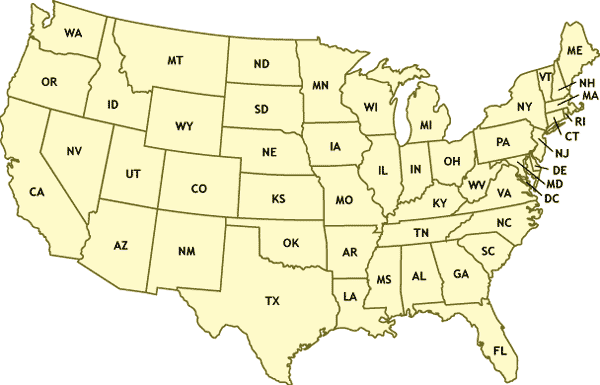 USA STATE
 USA STATE
 USA STATE
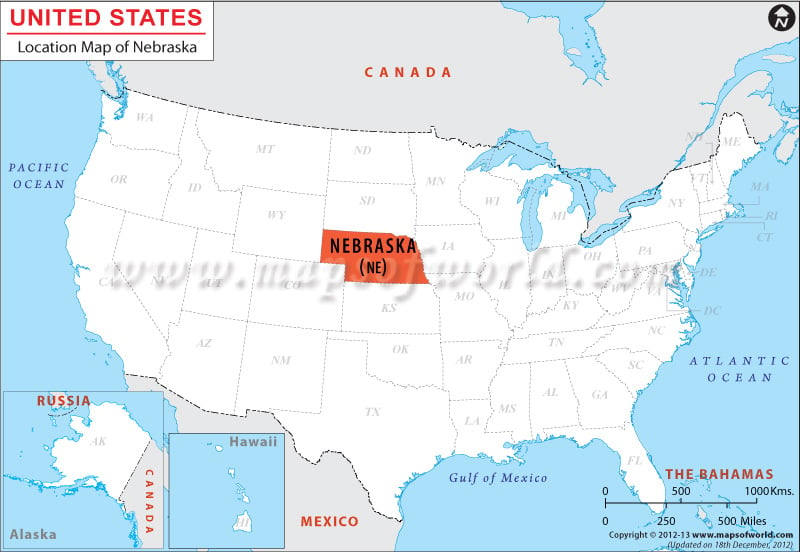 USA STATE
 USA BIG STATE
 USA STATE
 USA STATE
 USA STATE
 New York City Walpaper
 New York City Walpaper
 New York City Walpaper
 New York City Walpaper
 New York City Walpaper
 NEW
NEW
 New York City
 New York City
 USA City
 The Best City Of USA
 USA City
 USA City
 Usa City
 USA Best Building
 Amazing Shap
 USA City
 Inside USA City
 USA City