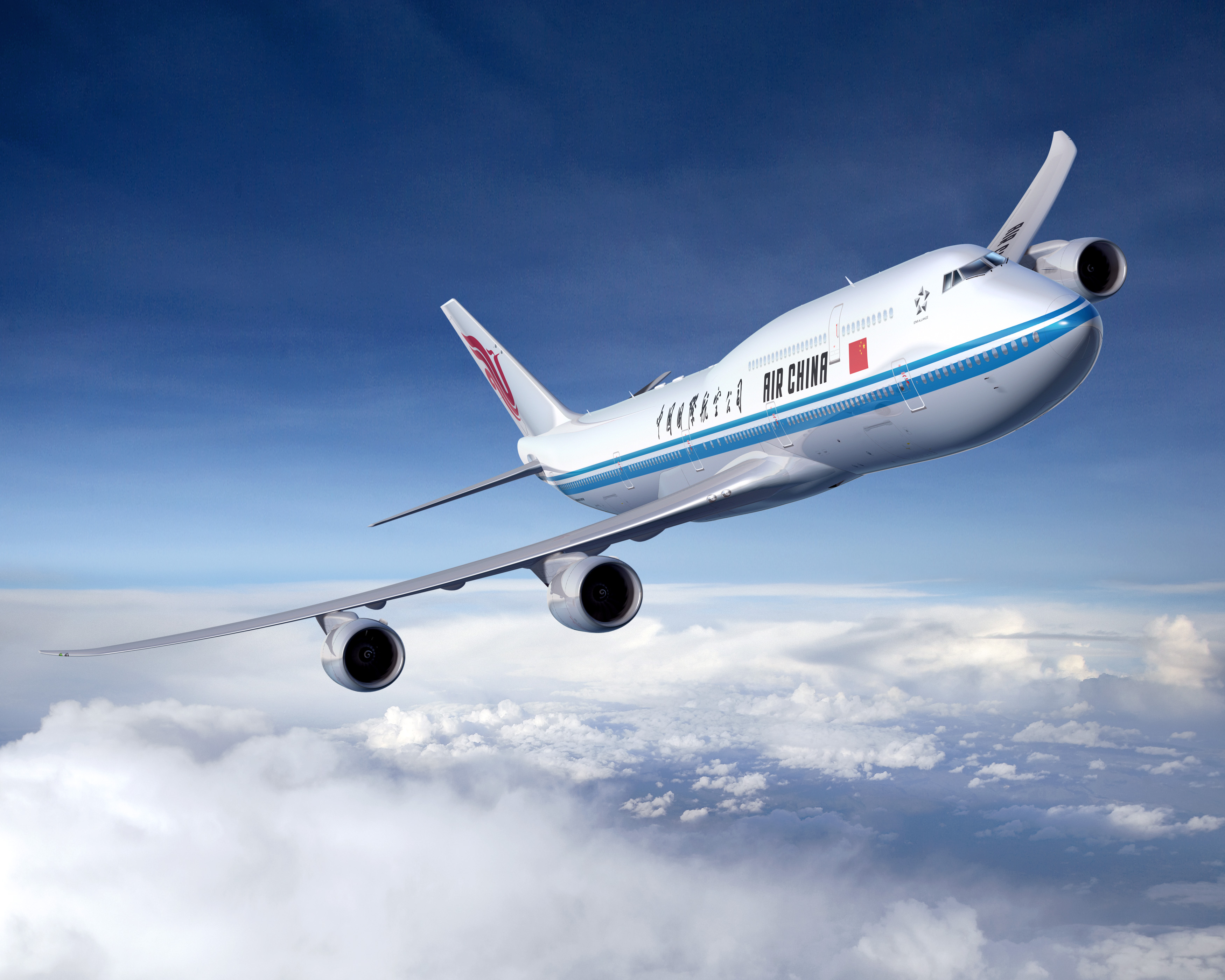
Air China First Chinese 747-8 customer


Air China has become the first Chinese customer to order the new 747-8 Intercontinental from US aircraft manufacturer Boeing.
The carrier has signed an agreement to purchase five of the passenger version of the new, fuel-efficient 747-8s.
However, the agreement requires Chinese government approval, at which time it will be posted to the Boeing orders and deliveries website.
“Air China has been operating 747s since the 1980s,” said He Li, vice president of Air China.
“The new, high capacity Boeing 747-8 Intercontinental will deliver exceptional economics and a great flying experience to our customers.”
Air China, the flag carrier of the People’s Republic of China, will use the airplanes to expand its international routes.
Last week Japan Airlines confirmed it would decommission its existing fleet of Boeing 747s.


Technological Advance
The new 747-8 Intercontinental carries 467 passengers in a three-class configuration. The airplane features a new wing design and an upgraded flight deck.
“The technologically advanced 747-8 Intercontinental will deliver improved operating economics, efficiency and environmental performance in support of Air China’s continued growth,” said Marlin Dailey, vice president of sales and marketing, Boeing Commercial Airplanes.
“Air China has become one of the fastest growing airlines in the world and today is one of the world’s largest carriers. 
“We are proud to be part of their success and look forward to continuing our long and enduring partnership.”
Using 787-technology GEnx-2B engines, the airplane will be quieter, produce lower emissions and achieve better fuel economy than any competing jetliner.
It also increases cargo volume by 26 per cent.

Source: BTN

Air China plans to double its fleet size by 2015


Air China, the world's biggest airline by market value, plans to double its fleet size to more than 700 aircraft by 2015, its chairman Kong Dong said on Friday.
Chinese carriers, including China Eastern and China Southern, have placed multi-billion dollar aircraft orders in recent years to cope with robust air travel demand.
The combined fleet size of Chinese airlines is expected to jump to around 5,000 planes by the end of 2015, up from 2,600 units at the end of 2010, the country's senior aviation regulator Li Jiaxiang has said.
Air China had 381 planes as of the end of June 2010, company data showed.
Beijing plans to build 13,000 km (8,078 miles) of high-speed rail lines by 2012, more than the rest of the world combined.
According to the government's blueprint, by 2020 the network will have expanded to serve more than 90 percent of the population, with a budgeted cost of CNY2 trillion yuan (USD$304.4 billion), and including 16,000 km of the fastest newly built lines.
Kong sees both challenge and opportunity in it.
"Airlines and high-speed railways are not like water and fire. Each has its own advantages," Kong told reporters on the sidelines of China People's Political Consultative Conference, a consultative body to parliament.
There would be chance of cooperation between high-speed rail and airlines, including code sharing, to allow seamless service for the public, he said.
High oil price, which has topped USD$100 barrel lately, however, remains a "fairly big challenge" for the industry over the next five years, he added.
Air China had in January projected more than a 200 percent year-on-year jump in its net profit.
Kong declined to provide earnings estimate for this year, but said the carrier aimed to become one of the top five global players by 2015.

Source: Reuters

Blog Archive