US Navy Plans to Launch UAV from Submarine

23 Desember 2011

UAV launch from the submarine (image : Raytheon)

US Navy Subs to Deploy Switchblade UAV

The US Navy plans to launch AeroVironment's Switchblade small, expendable unmanned aircraft from a submerged submarine during the RIMPAC 2012 naval exercise in the Pacific.

A contract has been awarded to Raytheon, which has developed the submerged launch vehicle (SLV) that allows the UAV to be deployed via the submarine's trash disposal unit when the boat is at periscope depth. The SLV gets the UAV to the surface dry and then ejects it into flight.

The contract for five sets of SLV and UAV is a continuation of the Submarine Over-The-Horizon Organic Capabilities (SOTHOC) program, under which Raytheon in 2008 demonstrated the "over-the-side" deployment of the SLV and UAV from a surface ship.

In the SOTHOC concept, the SLV and electric-powered UAV are stored on board as an all-up round. Ejected from the submerged submarine's trash disposal unit, the SLV is weighted to descend to a safe distance from the boat, then shed the weight and inflate a float collar.

Switchblade small and expendable UAV (photo : AeroVironment)

The collar is pulsed to control the rate of ascent. As it approaches the surface, the SLV deploys a water drogue to provide stabilization and a vane to align it into the wind. The tube then pivots to a 35-degree angle and ejects the folding-wing UAV.

According to a "justifaction and approval" on fbo.gov for award of the sole-source contract to Raytheon to support RIMPAC 2012, the company has been working on SOTHOC since 2007 and deployed the Switchblade from a submerged submarine at periscope depth for the first time under a FY2008 follow-on contract.

Under an FY2010 contract, the J&A says, Raytheon upgraded the Switchblade for the SOTHOC concept, conducted land-based testing and supplied five SLVs and seven UAVs for a tactical development exercise. The latest award is being made under the same IDIQ umbrella contract.

(Aviation Week)

Exercise Kilat Eagle Brings U.S. and Malaysian Forces Together

16 Desember 2011

Marines with Company I, Battalion Landing Team 3/1, 11th Marine Expeditionary Unit, load a CH-46E Sea Knight aboard USS Makin Island here Dec. 14 to participate in Exercise Kilat Eagle, a bilateral training event between Marines and sailors of MEU and soldiers from the Malaysian Army. The Camp Pendleton, Calif., based 11th Marine Expeditionary Unit deployed from San Diego Nov. 14 aboard USS Makin Island, USS New Orleans and USS Pearl Harbor and arrived in Malaysia Dec. 14 as part of a regularly scheduled deployment to the Western Pacific and Middle East regions. (photo : dvidshub)

KUANTAN, Malaysia - Marines and Sailors with the 11th Marine Expeditionary Unit (MEU) began a cooperative exercise with elements of the Malaysian Army Dec. 14.

The exercise focuses on jungle training, air assault operations, staff exchange and platoon and company movements.

“Kilat Eagle reinforces our relationship with the Malaysian forces and provides a unique training opportunity for all parties,” said Col. Michael Hudson, 11th MEU’s commanding officer. “We look forward to sharing all that this agile, forward-deployed Marine air-ground-logistics team has to offer.”

During the exercise Marines plan to learn jungle survival and work with their Malaysian counterparts to improve helicopter-borne assault techniques. A staff exchange will also take place blending the experiences and functional areas of the forces.

“This is a golden opportunity,” said Hudson. “The venues and expertise offered by our gracious hosts will allow us to train with the Malaysians while keeping us sharp for our deployment as America’s premier fighting force in the littorals.”

The Marines and Sailors taking part in the exercise came ashore from the amphibious assault ship Makin Island which departed its San Diego homeport Nov. 14. The MEU and Amphibious Squadron 5 make up the Makin Island Amphibious Ready Group.

The MEU's major subordinate elements participating in the training are the Battalion Landing Team 3/1, Marine Medium Helicopter Squadron 268 (Reinforced) and Combat Logistics Battalion 11.

(US 7th Fleet)

Smith Forecasts Cocos Islands Joint Military Base

21 November 2011

Cocos Island (image : GoogleMaps)

THE upgrading of defence ties with the US may include the development of joint military facilities on Cocos Islands.

Defence Minister Stephen Smith said yesterday the first priority would be upgrading the HMAS Stirling naval base, near Perth. "In the future, there may well be some possibility or prospect of greater utilisation of Cocos Islands," he said.

Mr Smith told the Ten Network there would have to be a major upgrade of the infrastructure on Cocos Islands, an Australian territory in the Indian Ocean, before they were fit for joint use by the Australian and US forces.

His comments confirm that the steps announced last week, starting with 250 additional US troops visiting Darwin, mark the start of what is likely to be a much wider collaboration. Mr Smith has played down suggestions of China's displeasure with the new military arrangement between Australia and the US, saying the official response has been measured and appropriate.


But a spokesman for China's Ministry of Foreign Affairs, Liu Weimin, said the move might not be in the interests of countries in the region and questioned the expansion of military ties while global economics were still shaky.

An editorial in China's state-run People's Daily newspaper went further, saying if Australia used its military bases to help the US hurt Chinese interests, "one thing is certain . . . Australia will be caught in the crossfire".

Mr Smith said the media commentary should be divorced from China's official response.

"And the official response has quite frankly been a measured one. It hasn't been over the top."

He said China was against military alliances, but understood Australia's ties with the US.

(The Australian)

USN to Operate with Nine CSGs by Year's End

17 Agustus 2011


CVN 76 USS Ronald Reagan (photo : US DoD)


The US Navy (USN) will operate with nine carrier strike groups (CSGs) by the end of the year, reducing the effectiveness of the service's 11-carrier force, Jane's has learnt.


The service plans to dissolve CSG Seven, previously attached to USS Ronald Reagan (CVN 76), in reaction to a short-term reduction in carrier capability following the planned decommissioning of USSEnterprise (CVN 65) in 2013 and before the first next-generation Gerald Ford-class carrier (CVN 78) commissions in 2015.


According to a 1 August memo from the office of the Chief of Naval Operations, a CSG will be relocated from Naval Station Everett, Washington, to Naval Station San Diego, California, to shore up the loss when CSG Seven stands down in December. CSG Nine from Everett will replace CSG Seven. CSG Nine is currently composed of USS Abraham Lincoln (CVN 72), Carrier Air Wing Two and elements of Destroyer Squadron (DESRON) Nine.


Next year Abraham Lincoln will begin its mid-life refuelling and complex overhaul (RCOH), which will take four years to complete and keep the carrier out of the fleet for the duration of the repairs and refuelling.


Currently USS Theodore Roosevelt (CVN 71) is undergoing that process, which is expected to be completed by late 2012 or early 2013.


Underwater Gliders for the US Navy

14 Juli 2011

Slocum Glider UUV (all photos : Defense Industry Daily/Hydro Interntional/AUVAC)

Teledyne Brown Engineering, Inc., in Huntsville, AL recently received approval from the U.S. Navy to move into the Full Rate Production (FRP) Phase on the underwater Littoral Battlespace Sensing-Glider (LBS-G) Program. The first Full Rate Production option calls for the manufacture of 35 gliders, with additional options for 100 more, and a total contract value of $53.1 million if all options are exercised. US Space and Naval Warfare Systems Command manages the contract.

The Teledyne Team has already delivered 15 Low Rate Initial Production LBS-Gs to the US Navy’s Program Executive Office for C4I, under a December 2010 contract. That team includes Teledyne Brown (System Integration), Teledyne Webb Research in East Falmouth, MA (Slocum Glider development and production), and the University of Washington – Applied Physics Lab (Glider Operations Center software). Their 2m long design features a very innovative propulsion concept…


Teledyne’s glider uses changes in buoyancy to propel itself through the ocean. Instead of using mechanical means to change that buoyancy, however, it mostly relies on the ocean’s own temperature and pressure changes.

To sink, a valve allows oil from a flexible bladder on the outside to flow in, lowering volume but keeping mass constant. The glider sinks. Liquid wax inside internal tubes shrinks and solidifies as it descends into colder waters, letting oil in. The glider will continue descending to about 5,000 feet, then another internal storage tank filled with oil and nitrogen at 3,000 psi pressure is used to force oil back into the external bladder. As the now-buoyant glider heads toward the surface, its wings provide lift and forward motion, while sensors in the nose gather oceanographic data.


The glider will eventually surface about 5 km/ 2.75 miles away, where surface water temperatures of about 80F/ 27C liquefy the wax again. Liquids can’t really be compressed, so the liquid wax forces the oil and nitrogen back into the storage tank, resetting the gas “spring” for use in the next cycle. At the surface, the glider reports its position, transmits data via satellite, and receives any sent commands.

That propulsion system means the glider can be at sea for weeks at a time, allowing subsurface sampling on a regional scale. In 2009, a Slocum Glider managed to cross the Atlantic in 223 days.
The US Navy plans to use its fleet of deep and shallow water LBS gliders to acquire critical oceanographic data, which will improve positioning of fleets during naval maneuvers. It also has obvious uses for submarine hunting, and hiding, given the effect of temperature layers on sonar propagation.

(Defense Industry Daily)

Joint Navy Exercise Reels Off

16 Juni 2011

USS Safeguard, designated as the COI for the participating Southeast Asian Navies (photo : navsource)

COMBINED navy forces from the Philippines, Brunei, Indonesia, Malaysia, Thailand and the United States Navy is holding a 10-day annual combined exercise aimed to enhance interoperability and share best practices.

Codenamed SEACAT 2011, the exercise is joined by the Philippine Navy (PN) units from the Naval Forces West (NFW), Naval Forces Eastern Mindanao (NFEM), and Naval Forces Western Mindanao (NFWM) areas of responsibility (AOR) in succession with five Southeast Asian Navies from Brunei, Indonesia, Malaysia, Singapore and Thailand.

They will participate together with the US Navy in a scenario-driven fleet training exercise against terrorism, transnational crimes and other maritime threats which focuses on real time information exchange, coordinated surveillance operations, tracking, and eventual conduct of Visit Board Search and Seizure (VBSS) to the maritime Contact of Interest (COI).

“This activity will involve surface, air, and special operations units in the conduct of surveillance, tracking, and boarding of the COI from the different participating navies within their respective maritime territories,” SEACAT 2011 exercise director Philippine Navy Captain Sebastian Pan said.

Three ships from the three Naval forces of the Philippine Navy will participate in this year’s SEACAT 2011 exercise, Pan added.

As practiced in the yearly SEACAT, Pan said that several ships from each participating Southeast Asian navy will join the training with the one US Navy ship--USS Safeguard--designated as the COI for the participating Southeast Asian Navies.

In the Philippines, he said one Maritime Interdiction Operations (MIO) scenario with boarding opportunity will be conducted at the Sulu and Mindanao Seas.

At the same time, Coast Watch stations in the different participating Naval Forces AORs will be utilized to exercise their capabilities in surveillance, tracking, communications, and operations.

Exercise SEACAT is a yearly combined exercise conducted at vital sea lanes in Southeast Asia to ensure control of vital sea lanes from terrorists, poachers, and transnational lawless elements.

Venues have been determined in advance during coordinated planning sessions and are finalized following confirmation from all participating navies.

“This exercise aims to promote regional coordination, information sharing and interoperability in a multilateral environment,” Pan said.

With this training, Pan said the Philippine Navy will be able to enhance regional coordination, information sharing, and combined inter-operability capability with participating navies in the region, tests its personnel and naval assets operational readiness and ultimately, improve the defense capability of the Armed Forces of the Philippines.

The combined exercise, dubbed Southeast Asia Cooperation and Training (SEACAT) started Tuesday, June 14, and ends on Friday, June 24, is being held in Malacca Strait, Sulu Sea and Celebes Sea.

(SunStar)

GPS Anti-Jam Technology Revealed

13 Juni 2011

GPS anti jam (photo : NovAtel)

GAJT (GPS Anti-Jam Technology) optimizes battlefield performance by nullifying the effect of multiple GPS jammers.QinetiQ and NovAtel Inc. have brought together their unique skills and technologies to launch GAJT (pronounced “Gadget”), the world’s first single-enclosureGPS anti-jam system which is a stand-alone, rugged enclosure that mounts to the exterior of vehicles.

Intentional jamming and unintended interference of GPS can completely deny a position solution and timing over a wide area. GAJT is a seven element controlled reception pattern antenna (CRPA) that nulls jammers, ensuring GPS positioning capabilities are retained during combat, training or other vehicle-based missions.

As an externally mounted single-unit enclosure, no additional electronics are necessary inside the vehicle; only power and a single RF cable are required to connect to legacy GPS receivers. The simplicity of its design results in faster installation, minimal vehicle downtime and training, and makes the antenna easier to integrate into new platforms, or retrofit onto existing platforms or fleets and works with standard military and civil GPS receivers.

Cathy Kane, QinetiQ Managed Services Director of Technology Insertion said, “We are delighted to be partnering with NovAtel to bring this much-needed and exciting force protection product to market. I have been particularly impressed at the way the people from NovAtel and QinetiQ have brought their different skills together to form an effective team.”

”Michael Rittter, President and CEO of NovAtel stated, “GAJT is the first GPS anti-jam system that is small enough, and at a price point that makes sense to use on land-based military vehicles such as LAVs (light armoured vehicles).” Mr. Ritter added, “We are extremely pleased to have developed a game-changing product that will protect the positioning and blue force tracking of troops on the ground, and potentially save the lives of personnel who encounter jammers while in theatre.”

GAJT is a commercial off-the-shelf (COTS) product, providing short order lead times and enabling quick deployment to the field. Manufactured in Canada, and incorporating Canadian and UK technology, GAJT only requires Canadian and UK export approval, which means exporting to authorized customers in foreign countries is greatly simplified.

(Qinetiq)

US to Deploy Littoral Combat Ships to Singapore

04 Juni 2011

Freedom class LCS. The LCS is a fast, highly manoeuverable, networked surface combat ship. (photo : Lockheed Martin)

SINGAPORE: United States (US) Defence Secretary Robert Gates said the US plans to deploy littoral combat ships to Singapore and seek ways to work with its military.

"In Singapore, we are strengthening our bi-lateral defence relationship within the context of the Strategic Framework Agreement and pursuing more operational engagement.

Independence class LCS. In both designs, the sprint speed of 40kt to 50kt results in the body of the hull being lifted out of the water as much as possible. (photo : General Dynamics)

"Most notably, by deploying US Littoral Combat Ships to Singapore. We are examining other ways to increase opportunities for our two militaries to train and operate together," he said at the question & answer session after the First Plenary Session - Emerging Security Challenges in the Asia-Pacific at the 10th IISS Asia Security Summit The Shangri-La Dialogue here today.

Gates said the US was looking to prepositioning supplies to improve disaster
response, improving command and control capabilities and expanding training opportunities.

"This is to help prepare our forces for the challenges both militaries face operating in the Pacific," he added.

(Bernama)

First Precision Guided Mortar Deployed

31 Maret 2011

The Accelerated Precision Mortar Initiative XM395 cartridge uses a standard M934 high-explosive 120mm projectile body. In the nose, a GPS receiver and computer controlled aerodynamic directional fins keep the round on its programmed trajectory. Folding fins in the tail provide stability. (photo : US Army)

Picatinny fields first precision-guided mortars to troops in Afghanistan

PICATINNY ARSENAL, N.J. -- This month, U.S. Soldiers in Afghanistan received 120mm GPS-guided mortar precision capability.

The Program Executive Office for Ammunition fielded Accelerated Precision Mortar Initiative cartridges, or APMI, to one Infantry Brigade Combat Team, or IBCT, earlier this month, and is scheduled to field cartridges to the seven other IBCTs in Afghanistan within six months.

"APMI is a 120mm GPS-guided mortar cartridge that provides the infantry commander precision-strike capability, which he has never had before," said Peter Burke, PEO Ammunition's deputy product manager, Guided Precision Munitions and Mortar Systems.

Mortars are an indirect firing capability used to defeat enemy troops, materiel, bunkers and other infantry-type targets.

"Typically mortars are fired in volleys against an area target because of their inherent inaccuracy, but with APMI, you have the potential to destroy a target with only one or two rounds," Burke said.

The APMI cartridge has a requirement of 10 meters CEP, or Circular Error Probable, but Burke said the program is exceeding this requirement. Ten meters CEP means that if you drew a circle around a target at 10 meters radius, the rounds have to fall inside the circle 50 percent of the time.

Current CEP for 120 mm mortars at their maximum range is 136 meters. Mortars with the most advanced features, such as precision position and pointing systems, can achieve a 76 meter CEP, which still makes APMI seven times more accurate than any formerly fielded mortar.

While APMI will not replace standard 120mm mortars, its accuracy will allow a commander the ability to defeat a target with precision if there is danger of collateral damage, Burke explained.

Insurgents deliberately plan attacks in populated areas in the hope that opposing forces don't want to retaliate and risk accidental harm to civilians or damage to non-military property.

"Sometimes, if the risk of collateral damage is too high, you might not be able to fire (a standard 120mm) at all," Burke said of enemy engagements. "In that case, instead of firing a mortar from a protected position, you would have to send troops in to engage with direct-fire weapons, exposing them to more risk.

"But because of APMI's GPS-technology, which provides an accurate, first-round fire-for-effect capability, troops will have opportunities to employ APMI's precision where they previously would not, such as nearer to friendly forces or in urban areas.

Besides reducing risk to the local population and keeping U.S. servicemembers out of harm's way, APMI reduces the logistical burden of ammunition resupply.

A mortar unit typically carries 25 High-Explosive, or HE, rounds with them, Burke said, and they will now carry a mixture of standard and APMI rounds. Instead of firing large quantities of HE rounds, troops can fire one or two APMI and eliminate the target, so their resupply needs should be reduced.

The APMI, Inside and Out

The APMI XM395, cartridge uses a standard M934 high-explosive 120mm projectile body. In the nose, a GPS receiver and computer controlled aerodynamic directional fins keep the round on its programmed trajectory. Folding fins in the tail provide stability.

APMI also has a multi-functional fuse, which allows the round to be programmed to explode in the air, once it hits a hard surface or after it penetrates inside a target.

In order for the autonomous flight and fuse control to function properly, operators must input mission and GPS data from a fire control computer into the round using a setting device.

Earlier PEO Ammunition program investments contributed to APMI's development by providing technological building blocks and by paving inroads, including the 155mm Excalibur round and the Precision Guidance Kit, referred to as PGK. PGK is a low-cost, GPS-guided fuse kit that improves the accuracy of existing 155mm artillery rounds.

The Armament Research Development and Engineering Center, or ARDEC, co-located here, develops advanced fire control systems that help mortar operators improve the speed of their operations and the accuracy of their fires. These include the Lightweight Hand-held Mortar Ballistic Computer and the Dismounted 120mm Mortar Fire Control System, which were modified for the APMI fielding to ensure mortar operations remain streamlined.

"There were many difficult technological hurdles we crossed previously during our development of digital fire control systems requiring interface with smart projectiles that culminated in the APMI," said Patti Alameda competency manager, of ARDEC's Mortar and Common Fire Control Systems Division. "The ability of people to work as a team and integrate all of the sophisticated technology in a way that reduces the burden on the Soldier is really how we achieve this leap forward in capability.

"The APMI cartridge is fired from the M120 mortar system, which is compatible with the M326 Mortar Stowage Kit. Also developed at ARDEC, M326 Mortar Stowage Kits are now in full scale production and will be fielded to IBCTs over the next several years.

As of right now, Burke said there is no requirement for precision capability for 81mm and 60mm mortars.

The Army's requirements for larger caliber precision munitions allow technology to be more easily adapted to these larger rounds, he said.

"The 120 gives you a lot more room to work with," Burke said. "To fit all the electronics into smaller cartridges, with today's technology, is not feasible. They started with the biggest size to give us the most room to work with. Plus, you're getting the lethality of a 120, which is leaps and bounds above what a 60mm HE round can do."

Travel warnings after Japan's earthquake


Following are travel warnings from several countries following the earthquake and tsunami in Japan. UNITED STATES The US State Department urged US citizens to avoid tourism and non-essential travel to Japan at this time and also requests all non-essential official US government personnel defer travel to Japan. BRITAIN Britain's Foreign Office advised against all non-essential travel to Tokyo and the northeast of Japan. "Our advice is people should take their lead from the Japanese authorities," Foreign Office minister Jeremy Browne told Sky News. "The Foreign Office travel advice is not to go to that part of Japan in any case unless you have an extremely compelling reason for doing so." FRANCEFrance recommended its citizens leave the Tokyo region, citing the risk of further earthquakes and uncertainty over damaged nuclear plants. A statement on the website of the French embassy in Japan noted that Japan's meteorological office saw a 70 percent chance of a strong fresh aftershock in the north of the Kanto (Tokyo) region in the next three days. "We strongly advise our nationals not to travel to Japan and we strongly recommend delaying any journey planned," the embassy website said.GERMANY Germany's foreign minister advised Germans to consider if their travel to the Yokohama/Tokyo region was really necessary. "Given the current situation, the foreign ministry warns against staying in the crisis region and advises all Germans near nuclear plants or in the greater Tokyo/Yokohama area to consider whether staying in Japan is necessary," the foreign ministry website said. CANADA Canada warned its citizens to avoid all travel within 20 km of the Fukushima Nuclear Power Plant, and to avoid non-essential travel to areas of northern Japan that were near the quake and hit by the subsequent tsunamis. Canadians were also warned to "exercise high degree of caution" in travelling to the Tokyo region because of damage suffered by its transport, power and telecommunication systems. The warning note said there will be rolling blackouts in the Tokyo area starting March 14. SOUTH KOREA The South Korean foreign ministry has issued a travel advisory for Japan. It advised against travel to the Fukushima area and other areas north of Tokyo.

Source: Reuters

USA Basketball

usa basketball
usa basketball
usa basketball
usa basketball
usa basketball
usa basketball
usa basketball
usa basketball

DOD Releases Fiscal 2012 Budget Proposal

16 Februari 2011
U.S. aircraft carrier USS Ronald Reagan in Busan (photo : Allvoices)

President Barack Obama today sent to Congress a proposed defense budget of $671 billion for fiscal 2012. The request for the Department of Defense (DoD) includes $553 billion in discretionary budget authority to fund base defense programs and $118 billion to support overseas contingency operations (OCO), primarily in Afghanistan and Iraq.

The fiscal 2012 budget continues the DoD reform agenda, seeking additional efficiencies across the entire defense enterprise, while also strengthening our national security capability.

“This budget represents a reasonable, responsible and sustainable level of funding, the minimum level of defense spending that is necessary, given the security challenges we are facing around the globe,” said Defense Secretary Robert Gates.

The $553 billion for the base budget provides funding to take care of our people, which is our highest priority, and also provides substantial funding to build capability for possible future conflicts. The OCO portion totals $117.8 billion, $41.5 billion below the fiscal 2011 request of $159.3 billion. The proposal reflects the planned withdrawal of troops from Iraq by the end of the first quarter of fiscal 2012 and a modest decline in funding for Afghanistan operations.

While this budget request seeks continued efficiencies in 2012 and beyond, the absence of an appropriation for fiscal 2011 threatens to cause serious inefficiencies and problems this year. The current continuing resolution, if it remains in effect for the rest of the year, will lead to delays and inefficient, start-and-stop management. It will rob the DoD of the flexibility needed to manage effectively, especially in time of war, and it will not provide the Department with enough resources to maintain training and support while also paying bills for military pay, benefits, and inflation. In short the continuing resolution represents a crisis at our doorstep, and the DoD strongly urges the Congress to pass a defense appropriation bill as part of the overall legislation to fund government activities in fiscal 2011.

Malaysia to Join in Cobra Gold

05 Februari 2011


Cobra Gold Exercise in 2010 (all photos : ThaiRecon)


Malaysia will for the first time take part in the annual Cobra Gold joint military exercise this year, in which nearly 10,000 soldiers of six countries will participate, a military source said.


Cobra Gold 2011, the 30th of its kind, will be carried out between Feb 7-18 in northern Thailand under the jurisdiction of the 3rd Army Region.


The ceremony to launch the exercise will be held in Chiang Mai and co-chaired by Gen Pirun Phaewpolsong, the deputy supreme commander, and Judith Cefkin, deputy chief of mission at the United States embassy in Thailand.


A total of 9,536 soldiers of six countries will take part in the wargames -- 2,996 troops from Thailand, 5,900 from the US, 38 from Singapore, 54 from Japan, 304 from South Korea, and 13 from Malaysia.


Malaysia, formerly an observer, will join the exercise for the first time as a participant in the command post exercise (CPX).


Ten other countries will also take part in the multinational planning augmentation team (MPAT) training. They are Australia, France, Italy, Britain, China, Bangladesh, Cambodia, Nepal, India and the Philippines.


The exercise will be observed by military teams from China, India, Sri Lanka, Laos, Brunei, Russia, Mongolia, South Africa, United Arab Emirates and New Zealand.


According to the source, this year's Cobra Gold exercise has been moved forward from April-May to February to avoid summer heat , during which some US troops always suffer heatstroke. Moreover, the US wants Thai soldiers to be free to enjoy the Songkran celebrations in April.


The US troops to take part in the exercise are from the US Pacific Command (USPACOM).


In the last part of Cobra Gold 2011 there will be a landing exercise under live fire at Sattahip in Chon Buri province by Thai and US marines. The exercise is codenamed PHIBTRAEX.


There will also be a training exercise codenamed UNDERSEAL involving Thai and US sea-air-land-underwater demolition teams.


A major exercise using live ammunition will be held at Dan Lan Hoi district of Sukhothai province in the North.


Part of the exercise will also be held in the eastern provinces of Chon Buri and Rayong as well as in the Gulf of Thailand.


(Bangkok Post)

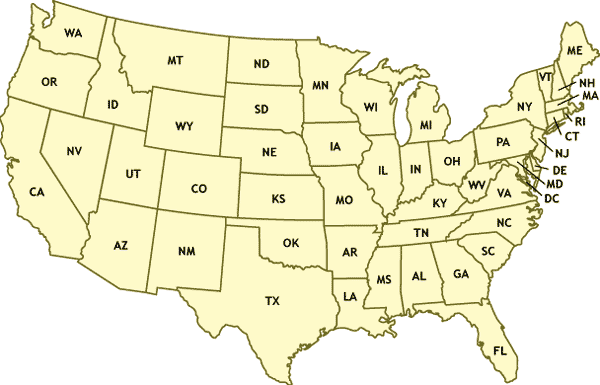
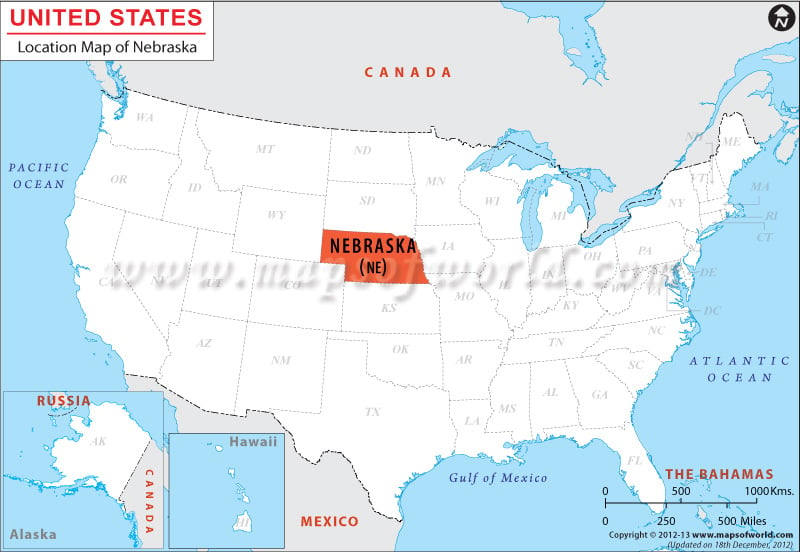
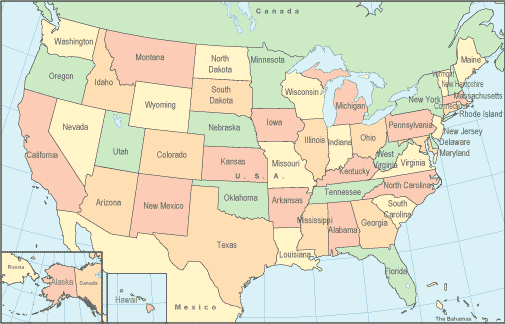
USA STATES

USA states.

USA BIG CITY PIC

New York is the most populous city in the United States[9] and the center of the New York Metropolitan Area, one of the most populous metropolitan areas in the world.[10][11][12] New York exerts a significant impact upon global commerce, finance, media, art, fashion, research, technology, education, and entertainment. The home of the United Nations Headquarters,[13] New York is an important center for international affairs and is widely deemed the cultural capital of the world.[14][15][16][17][18] The city is also referred to as New York City or the City of New York[19] to distinguish it from the state of New York, of which it is a part.[20.From Wikipedia

Blog Archive