As with the aerodynamics, I am also in a continuous learning mode with composite fabrication and also metalwork. We just purchased a TIG welding machine. That seems like a welding machine that have courage to try out, it is almost like using gas-welding but with a little arc. Hmm. like a little tesla-coil? How the arc behaves seems to be adjustable and e.g. it seems possible to avoid the crater when stopping weld by adjusting the time how long it takes for the arc to diminish. There are many adjustments in the machine and there is lot to learn. And we tried yesterday. Welding aluminum is tricky, it suddenly melts without prior warning. And even after that, it continues to melt more, if I didn't pay attention how long I heated it up. Anyway, seems like a fun challenge to master TIG-welding of aluminum. These things may be obvious for professional welders, but you know, they don't teach welding to engineers. One must start from somewhere. I will use the TIG-welding machine for construction of the big CNC machine that we have been planning with Kate for quite some time by now. A big CNC is needed for creating fuselage and wing plugs. Doing it inaccurately manually seems like great waste of time (have been trying and have found that it does not pay off, a better method is worth to be investigated - I don't take any "facts" for granted, unless I agree with the results and have compared the method to alternatives and found it to be the best for that purpose (by the way, different parts may require different kind of construction method, optimal is not always only one method)).
I have been researching also alternative materials since I obtained the Cozy MKIV plans (which I am not building right now). So I have pretty unused 20 kg can of MGS L285. Nothing wrong with the epoxy, but I just found out a better epoxy: The Hybtonite obviously - the carbon nanotube epoxy. The price seems competitive with the MGS (read: the MGS is overpriced because of shipping costs from Germany) and with about the same amount of money I could as well use this "breakthrough material". It does not change the world by itself, but it can add some welcome stiffness to pieces that might be otherwise too flexible. If I hadn't have this 20 kg unused can of MGS, I would be screaming and ordering a 20 kg can of Hybtonite right now. But having this unused epoxy in the garage a kind of slows the process down since I have lots of money invested in that can and the epoxy has limited shelf life. The Amroy representative is saying that the carbon nanotube material should be as safe as any other composite material (read: not more hazardous than epoxy is already, which is hazardous by definition).
I have been discussing off-line with one UAV/RC-plane designer. He has given me lots of valuable links. I may publish some of them sometime later on this blog, so stay tuned. I am not mentioning his name now, because I am not sure if he wants to be mentioned, but anyway, I find the information found this way quite interesting and helpful. As I have been reading these documents, it has also occurred to me sometimes, that what if the configuration layout would have looks and styling as one major parameter. In my opinion, B2 way the coolest publicly known aircraft out there. So I kind of love flying wings. But I have many reasons to not be thinking of designing a flying wing, for aerodynamic and stability standpoint. But one of the configurations (that I have known before of course, but these documents were kind of reminding me about those, that some find them actually useful over the conventional configuration) - the joint wing. What if you take a B2, use no twist - ie. make a normal main wing, and put a inverted V-tail into it in a box wing configuration so that the inverted V-tail starts from the wing tips, and it avoids yet another intersection by not connecting to the fuselage anywhere. This might make the controls a bit tricky, would mean wire in mechanical control rather than push-rods. Or maybe it could be a hybrid of fly-by-wire and manual control: aileron control could be manual and the elevator and rudder (and the mixing of the two) could be handled with electronics and servo motors would drive these surfaces. Would require very powerful servo motors though (needs to be very fast and very strong). But I have been sometimes kind of thinking this kind of fly-by-wire. Before someone screams that fly-by-wire takes hundreds of years to develop, I would like to remind that it is simple RC-plane technology that people are using all the time in the simplest form - fly-by-wire does not need to mean computerized flight controls and a aerodynamically unstable aircraft by definition. A electric wire weights less than a push-rod anyway when the length is very long (e.g. high aspect ratio wing, and in this case, something that starts from the wing tip). This configuration would make the cockpit very wide and not very tall. The looks would be compromised quite quickly if the cockpit part would protrude significantly from the wing. Obviously the cockpit section would be seamlessly blended into the wing. The interesting challenge here would be: how to make that work okay and minimize associated penalties rather than the motivation to choose this would be some parameter obtained from this configuration. At least it is that way until it is proven that this unorthodox configuration could be any good. At least it could be fun to make a RC-plane like that. And I would paint it to black. Full size plane would be trickier with the color, but there is high Tg Hybtonite available too. A realistic process could be infusion moulding with the hybtonite epoxy (I will investigate this at some point in the future, investing in process can pay back in construction phase significantly, instead of spending 20 years for sanding, I rather think first couple of years and try to optimize the actual construction work to not take 20 years). This would be a kind of alternative for carbon/glass prepregs.
Ernst Manufacturing Ultra Stand
Discount Price Ernst Manufacturing Best Deals 2012
I found Best Ernst Manufacturing Ultra Stand on Sale Now! with Amazon.com Offer Lowest Price Guaranteed, Save Money & Time with Free Shipping Offer on Order Over $25!!!
BUY NOW! You Will Save Up to 26%.
LIMITED TIME OFFER! CHECK PRICE! CLICK LINK BELOW!
>>> Ernst Manufacturing Ultra Stand SALE 2012 <<<
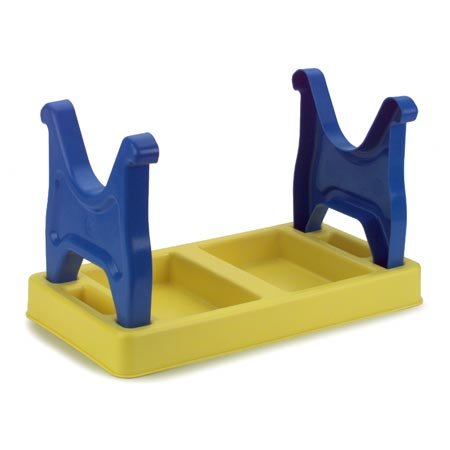

Keep you hands free to work on your plane with Ernst Ultrastand Features Comes with1 plactic base with 4 compartments, 2 cradels and 2 foam self-adhesive strips
Where You Can Buy Cheap Ernst Manufacturing Ultra Stand
You might be considering for cheap price of Best Ernst Manufacturing Ultra Stand or examining price to get the best bargain?
We provides you with a good solid wide range of Ernst Manufacturing Ultra Stand with quality and FREE shipping on qualified purchases.
By buying several products; you'll save your money on shipping and delivery charge if it is qualified for the Free Next Day Shipping Offer.
To take advantage of that, you'll need to buy a minimum of $25 value of eligible orders.
>>>Limited Time Offer, Do not hesitate to buy Cheap Price Ernst Manufacturing <<<<
Updated Prices at :Mar 19, 2012 15:30:07

Progress on the manufacturing / process side development
As with the aerodynamics, I am also in a continuous learning mode with composite fabrication and also metalwork. We just purchased a TIG welding machine. That seems like a welding machine that have courage to try out, it is almost like using gas-welding but with a little arc. Hmm. like a little tesla-coil? How the arc behaves seems to be adjustable and e.g. it seems possible to avoid the crater when stopping weld by adjusting the time how long it takes for the arc to diminish. There are many adjustments in the machine and there is lot to learn. And we tried yesterday. Welding aluminum is tricky, it suddenly melts without prior warning. And even after that, it continues to melt more, if I didn't pay attention how long I heated it up. Anyway, seems like a fun challenge to master TIG-welding of aluminum. These things may be obvious for professional welders, but you know, they don't teach welding to engineers. One must start from somewhere. I will use the TIG-welding machine for construction of the big CNC machine that we have been planning with Kate for quite some time by now. A big CNC is needed for creating fuselage and wing plugs. Doing it inaccurately manually seems like great waste of time (have been trying and have found that it does not pay off, a better method is worth to be investigated - I don't take any "facts" for granted, unless I agree with the results and have compared the method to alternatives and found it to be the best for that purpose (by the way, different parts may require different kind of construction method, optimal is not always only one method)).
I have been researching also alternative materials since I obtained the Cozy MKIV plans (which I am not building right now). So I have pretty unused 20 kg can of MGS L285. Nothing wrong with the epoxy, but I just found out a better epoxy: The Hybtonite obviously - the carbon nanotube epoxy. The price seems competitive with the MGS (read: the MGS is overpriced because of shipping costs from Germany) and with about the same amount of money I could as well use this "breakthrough material". It does not change the world by itself, but it can add some welcome stiffness to pieces that might be otherwise too flexible. If I hadn't have this 20 kg unused can of MGS, I would be screaming and ordering a 20 kg can of Hybtonite right now. But having this unused epoxy in the garage a kind of slows the process down since I have lots of money invested in that can and the epoxy has limited shelf life. The Amroy representative is saying that the carbon nanotube material should be as safe as any other composite material (read: not more hazardous than epoxy is already, which is hazardous by definition).
I have been discussing off-line with one UAV/RC-plane designer. He has given me lots of valuable links. I may publish some of them sometime later on this blog, so stay tuned. I am not mentioning his name now, because I am not sure if he wants to be mentioned, but anyway, I find the information found this way quite interesting and helpful. As I have been reading these documents, it has also occurred to me sometimes, that what if the configuration layout would have looks and styling as one major parameter. In my opinion, B2 way the coolest publicly known aircraft out there. So I kind of love flying wings. But I have many reasons to not be thinking of designing a flying wing, for aerodynamic and stability standpoint. But one of the configurations (that I have known before of course, but these documents were kind of reminding me about those, that some find them actually useful over the conventional configuration) - the joint wing. What if you take a B2, use no twist - ie. make a normal main wing, and put a inverted V-tail into it in a box wing configuration so that the inverted V-tail starts from the wing tips, and it avoids yet another intersection by not connecting to the fuselage anywhere. This might make the controls a bit tricky, would mean wire in mechanical control rather than push-rods. Or maybe it could be a hybrid of fly-by-wire and manual control: aileron control could be manual and the elevator and rudder (and the mixing of the two) could be handled with electronics and servo motors would drive these surfaces. Would require very powerful servo motors though (needs to be very fast and very strong). But I have been sometimes kind of thinking this kind of fly-by-wire. Before someone screams that fly-by-wire takes hundreds of years to develop, I would like to remind that it is simple RC-plane technology that people are using all the time in the simplest form - fly-by-wire does not need to mean computerized flight controls and a aerodynamically unstable aircraft by definition. A electric wire weights less than a push-rod anyway when the length is very long (e.g. high aspect ratio wing, and in this case, something that starts from the wing tip). This configuration would make the cockpit very wide and not very tall. The looks would be compromised quite quickly if the cockpit part would protrude significantly from the wing. Obviously the cockpit section would be seamlessly blended into the wing. The interesting challenge here would be: how to make that work okay and minimize associated penalties rather than the motivation to choose this would be some parameter obtained from this configuration. At least it is that way until it is proven that this unorthodox configuration could be any good. At least it could be fun to make a RC-plane like that. And I would paint it to black. Full size plane would be trickier with the color, but there is high Tg Hybtonite available too. A realistic process could be infusion moulding with the hybtonite epoxy (I will investigate this at some point in the future, investing in process can pay back in construction phase significantly, instead of spending 20 years for sanding, I rather think first couple of years and try to optimize the actual construction work to not take 20 years). This would be a kind of alternative for carbon/glass prepregs.
I have been researching also alternative materials since I obtained the Cozy MKIV plans (which I am not building right now). So I have pretty unused 20 kg can of MGS L285. Nothing wrong with the epoxy, but I just found out a better epoxy: The Hybtonite obviously - the carbon nanotube epoxy. The price seems competitive with the MGS (read: the MGS is overpriced because of shipping costs from Germany) and with about the same amount of money I could as well use this "breakthrough material". It does not change the world by itself, but it can add some welcome stiffness to pieces that might be otherwise too flexible. If I hadn't have this 20 kg unused can of MGS, I would be screaming and ordering a 20 kg can of Hybtonite right now. But having this unused epoxy in the garage a kind of slows the process down since I have lots of money invested in that can and the epoxy has limited shelf life. The Amroy representative is saying that the carbon nanotube material should be as safe as any other composite material (read: not more hazardous than epoxy is already, which is hazardous by definition).
I have been discussing off-line with one UAV/RC-plane designer. He has given me lots of valuable links. I may publish some of them sometime later on this blog, so stay tuned. I am not mentioning his name now, because I am not sure if he wants to be mentioned, but anyway, I find the information found this way quite interesting and helpful. As I have been reading these documents, it has also occurred to me sometimes, that what if the configuration layout would have looks and styling as one major parameter. In my opinion, B2 way the coolest publicly known aircraft out there. So I kind of love flying wings. But I have many reasons to not be thinking of designing a flying wing, for aerodynamic and stability standpoint. But one of the configurations (that I have known before of course, but these documents were kind of reminding me about those, that some find them actually useful over the conventional configuration) - the joint wing. What if you take a B2, use no twist - ie. make a normal main wing, and put a inverted V-tail into it in a box wing configuration so that the inverted V-tail starts from the wing tips, and it avoids yet another intersection by not connecting to the fuselage anywhere. This might make the controls a bit tricky, would mean wire in mechanical control rather than push-rods. Or maybe it could be a hybrid of fly-by-wire and manual control: aileron control could be manual and the elevator and rudder (and the mixing of the two) could be handled with electronics and servo motors would drive these surfaces. Would require very powerful servo motors though (needs to be very fast and very strong). But I have been sometimes kind of thinking this kind of fly-by-wire. Before someone screams that fly-by-wire takes hundreds of years to develop, I would like to remind that it is simple RC-plane technology that people are using all the time in the simplest form - fly-by-wire does not need to mean computerized flight controls and a aerodynamically unstable aircraft by definition. A electric wire weights less than a push-rod anyway when the length is very long (e.g. high aspect ratio wing, and in this case, something that starts from the wing tip). This configuration would make the cockpit very wide and not very tall. The looks would be compromised quite quickly if the cockpit part would protrude significantly from the wing. Obviously the cockpit section would be seamlessly blended into the wing. The interesting challenge here would be: how to make that work okay and minimize associated penalties rather than the motivation to choose this would be some parameter obtained from this configuration. At least it is that way until it is proven that this unorthodox configuration could be any good. At least it could be fun to make a RC-plane like that. And I would paint it to black. Full size plane would be trickier with the color, but there is high Tg Hybtonite available too. A realistic process could be infusion moulding with the hybtonite epoxy (I will investigate this at some point in the future, investing in process can pay back in construction phase significantly, instead of spending 20 years for sanding, I rather think first couple of years and try to optimize the actual construction work to not take 20 years). This would be a kind of alternative for carbon/glass prepregs.
Subscribe to:
Posts (Atom)